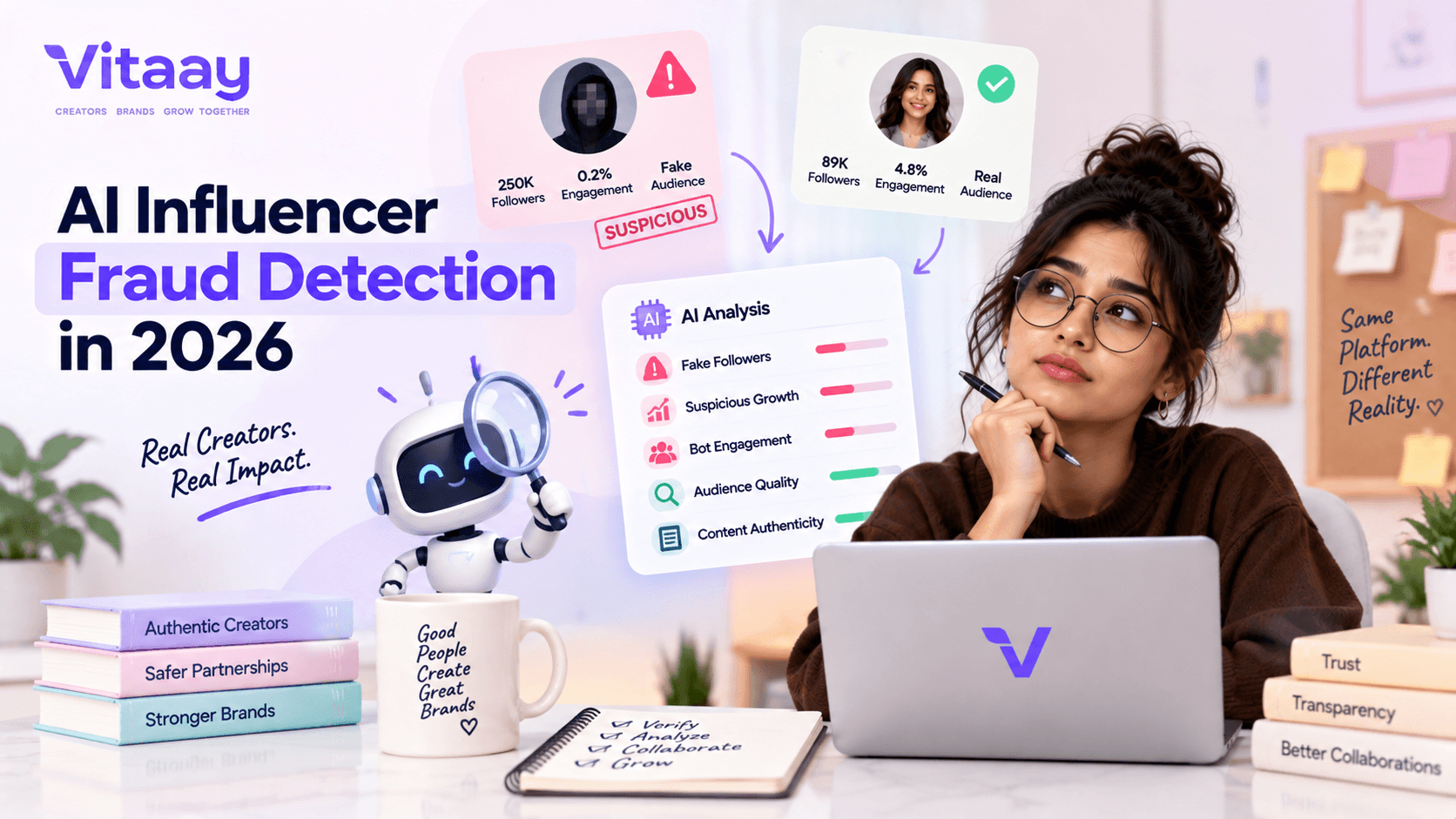
Influencer Marketing Trends 2026
Influencer marketing is changing quickly.
Brands are no longer looking at creators only as a way to generate reach. The focus is moving toward better creator fit, useful content, measurable business outcomes, and relationships that can continue beyond a single campaign.
At the same time, artificial intelligence is becoming part of everyday influencer workflows. Brands can use AI for discovery, matching, content support, reporting, and campaign management, while creators can use it for tasks such as ideation, editing, and localization.
But technology is not the whole story.
In 2026, the strongest influencer strategies are also putting more attention on authenticity, niche expertise, creator-led content, commerce, transparency, and long-term partnerships.
Here are the major influencer marketing trends for 2026 that brands and creators should understand.
- AI Is Becoming Part of the Influencer Workflow
AI is moving from an experimental tool to a practical part of influencer marketing.
Brands can use AI to support:
Creator discovery Creator matching Campaign research Brief creation Content analysis Reporting Performance analysis Campaign organization
Creators can also use AI for:
Content ideas Draft scripts Captions Editing assistance Translation and localization Trend research Scheduling support
Industry reporting in 2026 shows that brands and creators are already using AI across several parts of the influencer workflow.
The important change is how AI is being used.
AI works best as a support layer rather than as a replacement for creator judgment.
A creator still understands their audience better than an automated system. A marketer still needs to decide whether a creator is genuinely right for a brand.
Practical workflow
A simple AI-assisted workflow can look like this:
Campaign brief → AI research → Creator shortlist → Human review → Creator outreach → Campaign → Performance analysis
This keeps repetitive work efficient while leaving important decisions with people.
- Authentic Creator Content Is Becoming More Valuable
Influencer marketing is moving further away from content that feels like a traditional advertisement.
Audiences are exposed to a large amount of branded content every day. As a result, creators who maintain their natural communication style can offer something brands cannot easily reproduce with a standard advertisement.
Current 2026 industry coverage continues to emphasize authenticity and creator-led content over highly polished, rigidly scripted campaigns.
This does not mean every campaign needs to look unpolished.
It means the content should feel natural for the creator.
For example, a creator who normally explains skincare products in a simple, conversational way may be more effective with a flexible brief than with a word-for-word script.
What brands should change
Instead of controlling every sentence, brands can provide:
The campaign objective Key product information Required claims Important brand guidelines Disclosure requirements Deliverables
Then allow the creator to communicate the message in their own voice.
- Niche, Micro, and Nano Creators Are Getting More Attention
Bigger audiences are not automatically better audiences.
Brands are increasingly looking at creators based on relevance, expertise, community, and content fit.
A smaller creator who focuses deeply on a specific subject can be a better choice for a specialist campaign than a large general-interest creator.
This is especially useful for categories such as:
Personal finance Fitness Beauty Technology Food Gaming Travel Parenting Education Local communities
Industry discussions in 2026 continue to point toward stronger interest in niche and smaller creators because brands are looking beyond simple reach metrics.
The new question
Instead of asking:
How many people follow this creator?
Brands should also ask:
Does this creator reach the people who actually matter to this campaign?
That change can improve creator selection and make campaign planning more focused.
- Short Form Video Is Becoming More Performance Focused
Short form video remains central to creator marketing, but its role is changing.
It is not only being used for awareness.
Brands are increasingly connecting short form content with:
Product discovery Website visits Affiliate links Product pages Lead generation Purchases Retargeting Paid media
Industry reporting describes a shift toward using creator-made short form content across broader performance and paid-media workflows rather than treating it only as organic social content.
This creates an opportunity for brands to think about creator content as an asset that can have a longer life.
A strong creator video can potentially work on the creator's profile, the brand's social channels, landing pages, or paid campaigns when the appropriate rights have been agreed.
Practical workflow
Creator brief → Organic content → Performance review → Select strong assets → Obtain appropriate usage rights → Test through paid distribution
The key is to agree on usage rights before reusing creator content.
UGC Is Becoming a Separate Creator Opportunity
Influencer marketing and creator content are increasingly overlapping.
A creator does not always need a large following to provide value.
Some brands work with creators primarily because they can produce strong product videos, demonstrations, testimonials, tutorials, or lifestyle content.
That content can then be used by the brand on its own channels or, where rights allow, in paid advertising.
Industry sources in 2026 describe UGC creator marketplaces and creator-made content as an increasingly important part of the creator marketing ecosystem.
This creates two different creator opportunities:
Influence: Reach and engage an existing audience.
Creator content: Produce useful content for a brand.
Sometimes one creator can provide both.
But brands should understand which outcome they are actually paying for.
- Regional and Vernacular Creators Matter More in India
For brands targeting India, creator marketing is becoming more regional.
Hindi, Tamil, Telugu, Bengali, Marathi, and other language communities can provide brands with more locally relevant communication.
This is particularly important when the product or campaign needs cultural context rather than simply national reach.
2026 reporting from Indian creator-marketing sources highlights the increasing role of regional and vernacular creator campaigns.
A brand planning an India-wide campaign does not necessarily need one creator who speaks to everyone.
It can instead build a network of creators who understand different communities.
What These Trends Mean for Brands
The biggest change in 2026 is not one individual platform feature.
It is the way brands are approaching influencer marketing as a complete system.
A modern campaign can combine:
AI discovery + creator expertise + authentic content + commerce + measurement + long-term relationships
That means marketers should think about influencer marketing earlier in the planning process.
Instead of asking:
"Which influencer should we hire?"
start with:
"What are we trying to achieve, who needs to hear it, and which creators can communicate that message naturally?"
That question leads to better strategy.
A Practical Influencer Marketing Workflow for 2026
Here is a simple workflow brands can use.
Step 1: Define the objective
Decide whether the campaign is focused on awareness, engagement, content creation, leads, sales, or another goal.
Step 2: Define the audience
Document the audience's interests, location, language, and other relevant characteristics.
Step 3: Define the creator profile
Decide what type of creator fits the campaign.
Look beyond follower count and consider niche, content style, audience relevance, and brand fit.
Step 4: Use AI where it helps
Use AI for research, creator discovery, matching, brief support, and reporting where appropriate.
Step 5: Review creators manually
Watch recent content and check audience relevance, authenticity, brand safety, and communication style.
Step 6: Build the content plan
Give creators clear objectives and requirements while leaving reasonable creative space for their own voice.
Step 7: Plan measurement before publishing
Choose KPIs that match the campaign objective.
Step 8: Check disclosure and rights
Confirm sponsorship disclosure, content rights, AI usage, and distribution permissions.
Step 9: Publish and measure
Track the metrics that matter to the campaign.
Step 10: Build on what works
Identify strong creators, content formats, and audience segments that could support future campaigns.
For brands and creators looking to build better collaboration opportunities, explore Vitaay.
If you want to discuss a creator or brand collaboration opportunity, contact Vitaay.
The Future of Influencer Marketing
Influencer marketing in 2026 is becoming more strategic.
AI is helping teams discover and manage creators.
Authentic content is becoming more important than overly controlled advertising.
Niche creators can help brands reach specific communities.
Short-form content is becoming increasingly connected to performance.
Creator commerce is bringing content closer to purchase.
Long-term partnerships are giving brands and creators more room to build relationships.
And as AI-generated content becomes more common, transparency and trust are becoming even more important.
The brands that adapt well will not necessarily be the ones using the most technology.
They will be the ones using technology while still understanding what makes creator marketing work:
the right creator, the right audience, the right message, and a genuine connection.