
Quick Answer
Influencer marketing is a fast way to generate attention, but engagement alone cannot tell a brand if the campaign was money well spent. This is why marketers are now evaluating influencer ROI benchmarks to understand creator campaign performance and set realistic expectations.
The problem is that there is no universal ROI benchmark for influencers that would apply to all types of campaigns and cooperation structures. A product launch, an awareness campaign, an affiliate promotion, a direct sales push, and many other types of marketing have fundamentally different goals. Therefore, the main ROI benchmarks should be selected based on the objective of the campaign, the chosen attribution model, and many other factors.
Key Metrics for Measuring Influencer Marketing ROI

Influencer marketing campaigns can generate engagement quickly, but this metric alone cannot tell the brand if the money was well spent. So many marketing teams are now analyzing influencer ROI benchmarks to understand campaign performance and set realistic expectations.
The problem is that there is no universal ROI benchmark for influencers that would work for all types of campaigns and cooperation formats. A product launch, an awareness campaign, an affiliate promotion, and a direct sales push have fundamentally different goals and, therefore, require different ROI metrics to measure performance.
What Are Influencer Marketing ROI Benchmarks?
ROI benchmarks in influencer marketing are essentially industry standards that help in measuring the commercial performance of social media creators.
Typically, Return On Investment (ROI) is calculated by taking the ratio between the amount gained or lost and the amount spent. The simplest formula looks like this:
ROI = (Gained – Spent) / Spent × 100
Depending on the promotion goals, the spent and gained metrics can vary significantly. In influencer marketing, the “spend” can include payments to the creator, the cost of goods, agency fees, production costs, ad spend, and much more. ROI should not be confused with ROAS (Return On Ad Spend), which is a metric that reflects the revenue from ads in relation to the cost of these ads.
Why There Is No Universal ROI Benchmark
One of the most common misconceptions about measuring influencer marketing ROI is that there is a universal benchmark that works for all types of collaborations. In reality, each campaign has its unique combination of influencers, platforms, audiences, promotion formats, budgets, and goals. Even seemingly similar campaigns such as product launches can differ significantly in terms of objectives, target audiences, and chosen influencers. As a result, it is almost impossible to measure the performance of different campaigns using the same ROI metric. In fact, one campaign may focus on maximizing revenues and ROAS, while another one is geared toward product awareness and requires different metrics, such as impressions, reach, or engagement rate.
There are several other factors that affect campaign ROI and should be taken into consideration when selecting ROI benchmarks for a particular campaign:
Campaign goalsProduct categoryInfluencer audiencePlatformContent formatCreator’s remunerationCampaign lifetimeAttribution modelConversion pathPaid promotion
Key Influencer Marketing ROI Benchmarks to Track
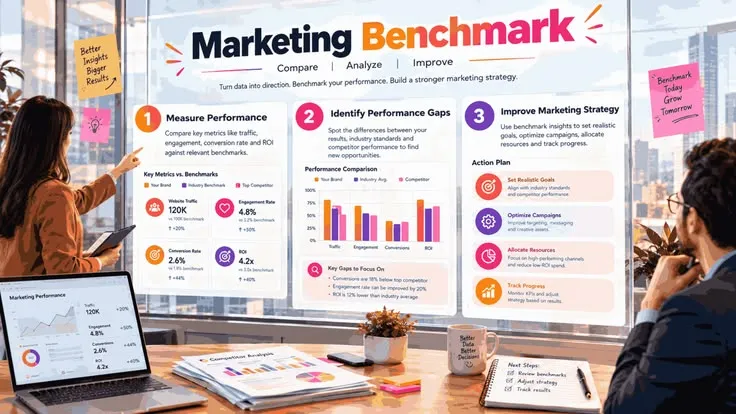
Instead of trying to find a universal ROI metric, companies should set up a comprehensive system for tracking the most important campaign statistics.
Here are the key metrics that should be used for measuring ROI in influencer marketing campaigns:
- Return On Investment ROIs are essential for evaluating the efficiency of any marketing campaign. They reflect the general relationship between the money spent and the revenue gained in the influencer marketing space. This metric is best used when all the campaign costs, including the creator’s fees, are taken into consideration.
- Return On Ad Spend ROAS is a popular metric among marketers that use influencers for promoting products and services. It is best used when influencers’ posts are directly linked to the ads that drive sales. For example, if the company spends $5,000 on qualifying ads and gains $15,000 in revenue from these ads, the ROAS is 3.
- Conversion Rate The conversion rate shows how many people performed a desired action after seeing an influencer’s post. The action can range from visiting the website to buying a product, registering for an email newsletter, downloading an app, or any other measurable activity.
- Cost Per Acquisition CPA is another important metric that reflects the cost of acquiring a customer. It helps in analyzing the effectiveness of different influencers and measuring how much the campaign budget is spent on obtaining one customer.
- Engagement Rate This metric is crucial for understanding the audience’s reaction to the influencer’s post. It reflects the percentage of people who like, comment, share, save, or perform any other action with the post. Engagement rate is most useful for measuring the performance of awareness campaigns.
- Earned Media Value EMV estimates the value of earned media, such as impressions, and compares it to the value of paid media. In other words, EMV helps in calculating how much the campaign would have cost if the impressions were bought instead of being earned. HypeAuditor’s EMV is a great tool for measuring this metric, as it uses a unique algorithm that allows for estimating the advertising value of social media engagement.
How to Use ROI Benchmarks Correctly
It is important to understand that ROI benchmarks should be used as a source of reference rather than an ultimate indicator of campaign performance. Here are a few simple rules that can help in using ROI benchmarks correctly.
First of all, marketers should define the purpose of the campaign and identify the goals that it wants to achieve. Depending on the objective, different metrics need to be tracked and different campaign spending need to be monitored. For example, a direct sales campaign will have a different ROI benchmark compared to an awareness campaign.
Next, it is important to calculate total campaign expenses and use this number as a baseline for further calculations. Marketers should remember that the creator’s fees are only a part of the overall expenses. Other costs such as production, media buying, etc., should also be added to the total campaign spend.
Now it is possible to select the metrics that need to be calculated in order to measure the performance of the campaign in relation to its goals. Some of the most common metrics for measuring ROI in influencer marketing include revenue, conversions, CPA, ROAS, engagement rate, impressions, reach, and many others.
Finally, marketers should compare the results of the current campaign with the results of previous campaigns and the industry benchmarks. It is important to analyze the data, identify patterns, and use this information to optimize future campaigns. It is always a good idea to compare the performance of different influencers, platforms, audiences, and campaign types to find out what works best for the brand.
A Practical Influencer Campaign Measurement Workflow
It might seem complicated to measure ROI in influencer marketing campaigns, but it can be done using this simple system: Define the objective: determine what the brand wants to achieve with the campaign. For example, the objective can be to drive sales, leads, brand awareness, website traffic, content creation, or something else.
Set KPIs: select the metrics that will be used for measuring campaign performance. Set a budget: add up all the campaign expenses, including the creator’s fees and additional costs such as production and media buying. Set the attribution model: determine how conversions will be tracked and measured. Measure the campaign: collect the data and evaluate the performance using the selected metrics. Calculate the ROI: calculate ROI, ROAS, CPA, conversion rates, or other metrics that were selected as KPIs. Compare results: compare the results of the current campaign with the previous ones as well as the industry standards to optimize future campaigns.
What Can Affect Influencer ROI?
Choosing the right influencers is only one part of the process. A creator’s influence is closely linked to several other factors, including the quality of the content, the target audience, the timing of the campaign, the offer, the landing page, and many others. A creator with a large audience might have a lower ROI if their followers are not interested in the product. At the same time, a creator with a smaller but highly engaged audience might generate higher ROI.
ROI vs ROAS: A Simple Comparison
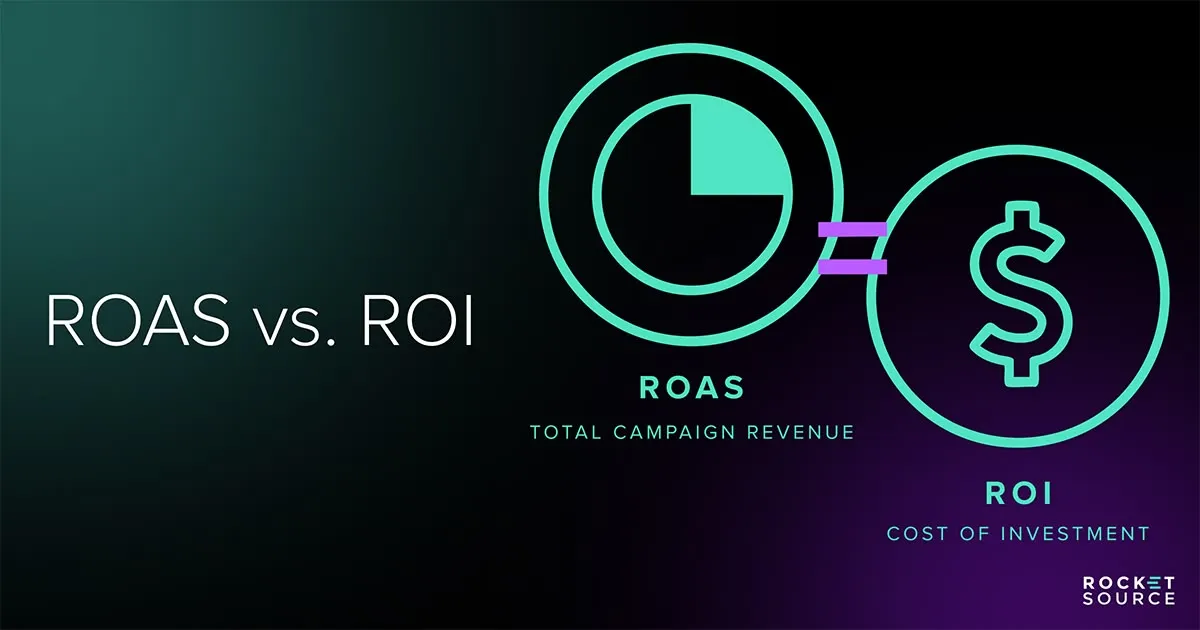
| Metric | What It Measures | Best Used For | | --- | --- | --- | | Return on Investment | Overall gain versus all capital spent | Assessing wider project earnings potential. | | Return on Ad | Spend Revenue versus ad money spent | Focus on revenue ads and paid boosting. | | CPC | Cost per click | Customer or lead acquisition. | | Completion | Rate Percent finishing a target task | Checking behavior following contact. | | Participation Level | User connection to material | Recognition and participation study. | | EMV | Estimated money worth gained from contacts | Comparing actual reach and contact worth. |
These are just a few of the most common metrics used for measuring the performance of influencer marketing campaigns. It is important to remember that each metric serves a different purpose and should not be used interchangeably.
How Brands Can Make Benchmarks More Useful
The most common benchmark for a brand is the result of its previous campaigns. For example, a company can track the following data:
Average cost per creatorAverage engagement rateAverage CPCAverage CPAAverage conversion rateAverage revenue per campaignAverage ROAS****Overall ROI
Instead of measuring success based on subscribers' numbers, brands can consider creators by how well their audience matches the content standards, engagement levels, selling performance, and budget rather than choosing a creator based on subscribers' number only.
For brands that need to consider creators on scale, one option is to use the creator-centric platform such as Vitaayas a part of their overall discovery process. This platform should still be reviewed manually.
Final Thoughts
Influencer marketing ROI benchmarks are essential for measuring the performance of social media campaigns. However, they should be used as a reference rather than an absolute indicator of success or failure. Measuring ROI in influencer marketing requires a comprehensive understanding of the campaign’s goals, objectives, and influencing factors, such as creator, platform, ad spend, and many others. The most reliable ROI benchmarks are usually determined based on a company’s previous campaigns and industry standards. However, brands need to analyze each campaign on a case-by-case basis rather than using general guidelines.
When it comes to measuring the ROI of an influencer campaign, brands should contact Vitaay and analyze the most effective ways to approach the process based on their specific objectives.
To follow Vitaay’s creator updates, follow Vitaay on Instagram .