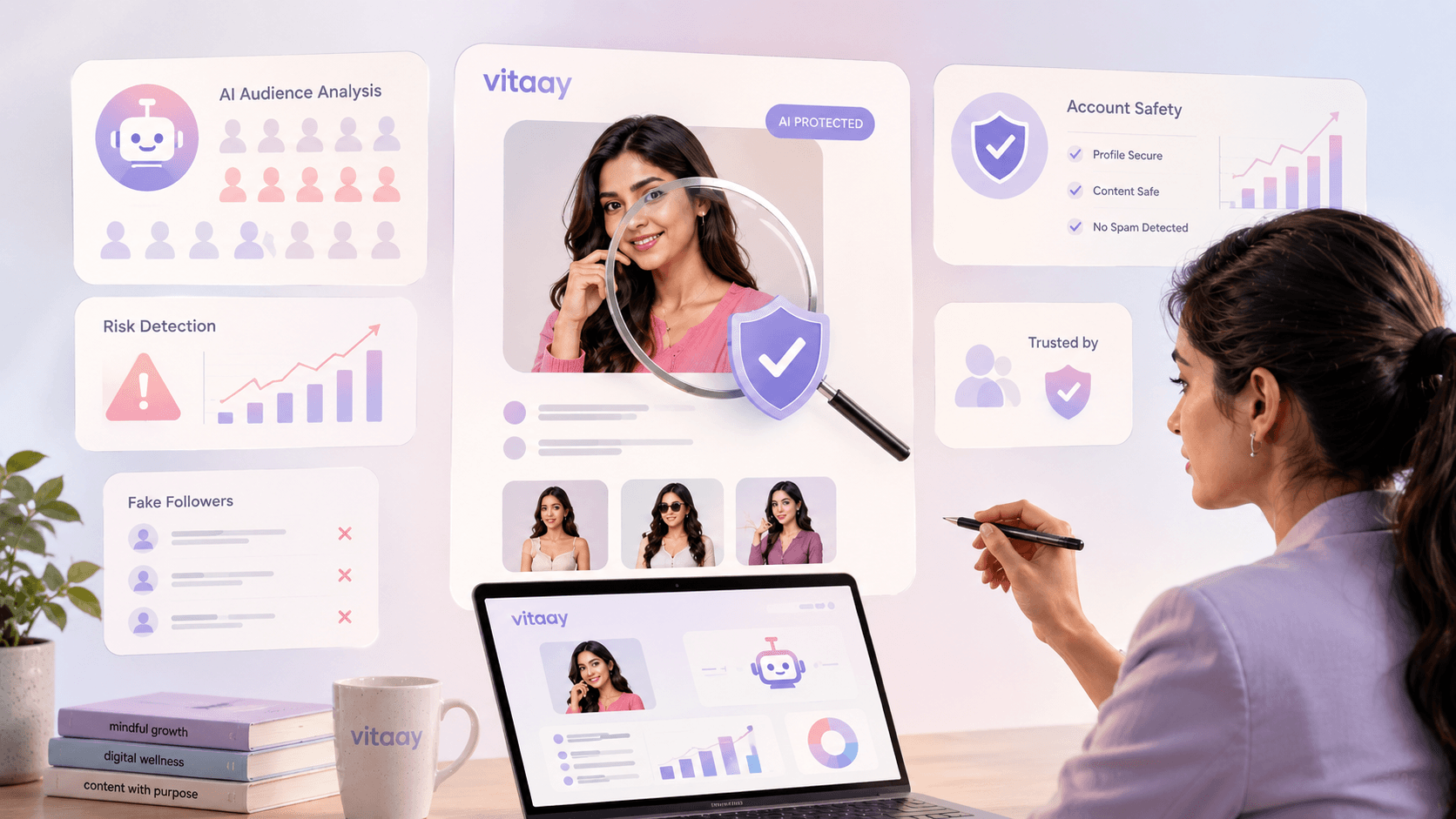
Why Influencer Fraud Has Become a Growing Problem
Influencer marketing has become an important channel for brands looking to connect with targeted audiences. However, the growth of the creator economy has also increased the risk of misleading metrics.
A creator may appear successful because of a large follower count, but those numbers do not always represent genuine influence. Fake followers, artificial engagement, and irrelevant audiences can reduce campaign effectiveness.
Brands need to evaluate creator authenticity before investing budget, products, and time into collaborations.
What Is Influencer Fraud Detection?
Influencer fraud detection is the process of identifying signs that a creator's audience or engagement may not represent genuine interest.
This includes detecting:
- Fake followers
- Purchased likes and comments
- Bot activity
- Artificial engagement patterns
- Audience mismatch
- Unnatural growth behavior
The purpose is not only to remove bad actors but also to help brands find creators with real communities and meaningful influence.
Common Types of Influencer Fraud Brands Should Know
Fake Followers: Some creators artificially increase follower numbers through purchased accounts or inactive profiles.
Engagement Pods: Groups of users may exchange likes and comments to create the appearance of higher engagement.
Bot Activity: Automated accounts can create interactions that do not represent real customer interest.
Audience Mismatch: A creator may have followers who do not match the brand's target audience.
Fake Growth Patterns: Sudden unexplained follower spikes can indicate artificial growth.
How Brands Can Identify Fake Followers and Inauthentic Creators
- Analyze Engagement Quality
Brands should review whether comments and interactions show genuine audience interest.
- Review Audience Authenticity
Look for suspicious follower patterns and whether the audience matches the creator's category.
- Analyze Growth History
Unusual spikes without relevant content activity may require further review.
- Review Previous Brand Collaborations
Past sponsored content can reveal creator authenticity and audience response.
- Use AI-Based Fraud Detection
AI can help analyze large numbers of creator profiles and identify unusual patterns faster. Fake Followers vs Authentic Creators Fake Influencer:
Followers: Inflated numbers
Engagement: Low-quality interactions
Growth: Sudden unnatural spikes
Audience: Irrelevant users
Brand Impact: Lower trust
Authentic Creator:
Followers: Genuine audience
Engagement: Meaningful conversations
Growth: Consistent development
Audience: Relevant community
Brand Impact: Stronger connection
Why Follower Count Alone Is Not Enough
Follower count is only one measurement of creator influence. A large audience does not automatically mean strong trust, relevance, or campaign performance.
Smaller creators can sometimes build stronger relationships because their communities are highly focused and engaged.
Brands should evaluate audience quality, content relevance, engagement, and authenticity instead of relying only on numbers.
How Vitaay Helps Brands Find Authentic Creators
Finding reliable creators requires more than checking follower numbers. Brands need a structured approach to creator discovery and campaign selection.
Vitaay helps brands manage influencer marketing workflows through an AI-powered approach that supports creator discovery, campaign management, and performance evaluation.
Explore Vitaay's AI-powered influencer marketing platform.
Building Safer Influencer Campaigns With Better Creator Selection
Better creator selection helps brands build stronger campaigns from the beginning.
Brands can start by defining campaign goals, understanding their audience, reviewing creator authenticity, and measuring performance after collaboration.
Start discovering authentic creators for your campaigns.
Common Mistakes Brands Make While Choosing Influencers
Common mistakes include selecting creators only because of follower count, ignoring audience relevance, skipping authenticity checks, and failing to review previous content.
A stronger approach combines data analysis with human evaluation to identify creators who genuinely match brand goals.
Where Human Judgment Still Matters
AI tools can identify signals and organize creator information, but human judgment remains important.
Brands still need to evaluate creator personality, brand values, communication style, content quality, and long-term partnership potential. Explore Vitaay's AI-powered influencer marketing platform Brands can start discovering authentic creators for your campaigns
Vitaay's AI-powered influencer marketing platform