Quick Answer
When using influencers in your marketing, brands want to know that they're targeting the right audience, creating meaningful engagement, and getting results based on their original aims.
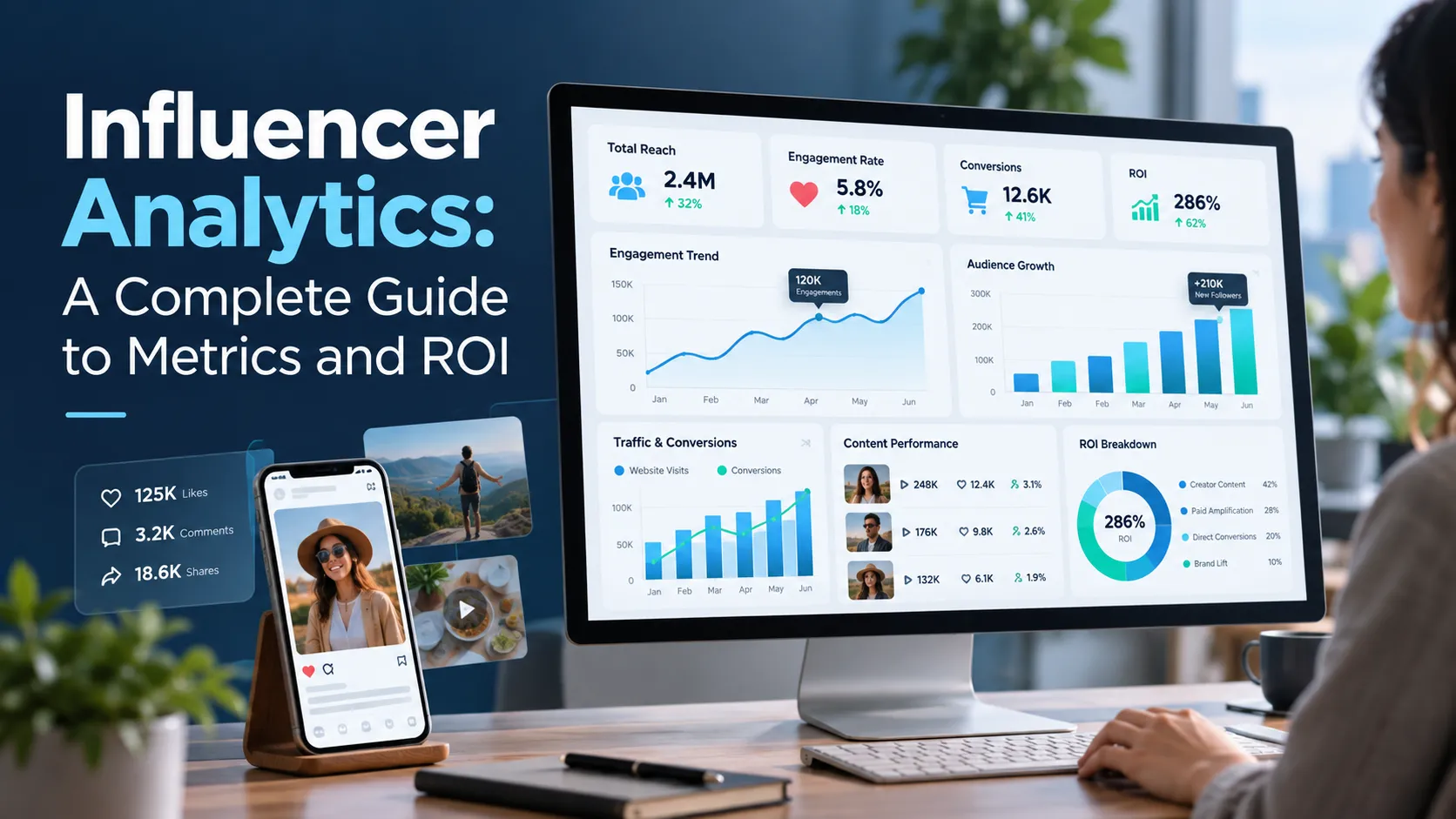
Influencer analytics is the process of gathering and analysing data around creators, their audiences, and their performance with your campaign. This helps marketers make more informed decisions.
For example, if your skincare brand wanted to use an influencer you could use analytics to find out that one influencer has a bigger audience, however another influencer has consistent thoughtful comments from an audience interested in skincare.
What is Influencer Analytics?

Influencer analytics is the process of tracking and analysing data around creators. It looks at their profile, content, engagement and marketing.
It helps brands understand:
- Are we targeting the correct audience?
- Is the creator creating meaningful engagement?
- Are we driving clicks to our website/product?
- Are we gaining sales/leads/brand awareness?
- What should we change in the next campaign?
Creator analytics looks at the audience and performance of the creator. Campaign analytics looks at a specific collaboration with the creator to see how well it's performing against your goals. Both are needed for informed decisions.
Why is Influencer Analytics Important?
It can help brands make sure they can track how they're performing to make sure they're not just blindly spending money.
Find better creators
You can use analytics to look at the audience, engagement, quality of content and topic relevance. This can help you find creators that match your goals.
Make more informed decisions with your budget
By looking at different creators and seeing how they're performing and how much it's costing you can make more informed decisions. Just because something is cheaper doesn't mean it'll be more effective.
Know how your campaign is performing
Using analytics will help you understand if your campaign is hitting the goals you've set.
Improve your campaign
Using performance data can help you see what content, messaging and creators are working and could be worth experimenting with in the future.
Top Influencer Analytics Metrics To Know

Depending on your goals you will need to use different metrics. If your campaign is focusing on brand awareness you would use different metrics to if you're aiming to drive sales:
| Metric | What It Measures | When to Use |
|---|---|---|
| Reach | Number of unique accounts that have seen the content. | To measure brand awareness. |
| Impressions | Total number of times the content has been displayed. | To understand how much exposure the content receives. |
| Engagement Rate | How engaged the audience is relative to a specified audience size or exposure. | To compare engagement across creators or campaigns. |
| Likes, Comments, Shares & Saves | Audience interactions with the content. | To understand how people react to the content. |
| Click-Through Rate (CTR) | Percentage of impressions that resulted in clicks, based on the defined calculation. | To measure audience interest and drive traffic. |
| Conversions | Number of desired actions completed, such as purchases or sign-ups. | To evaluate how effectively the campaign achieves its goals. |
| Cost Per Engagement (CPE) | Total campaign cost divided by the number of engagements. | To compare engagement costs across campaigns. |
| Return on Ad Spend (ROAS) | Revenue attributed to advertising divided by ad spend. | To evaluate revenue generated from paid promotions. |
It's important to understand how each metric works. For example engagement rate can be based on reach, impressions or followers. Ensure you're using the same method of calculation and document it so you can compare creators fairly.
Also, whilst revenue attributed to the creator may look like it's all down to them, there are many factors that can affect this such as attribution, other marketing channels, and the customers journey.
How to Measure Your Influencer Campaign
A good way to measure your campaign is to follow these steps:
Define your goals
Work out what your collaboration needs to achieve. If you're launching a new product you may want to focus on brand awareness and reach. If you're running an ecommerce campaign you may want to focus on tracked sales.
Don't try to make everything the main metric. Pick one main goal plus a few secondary metrics.
Baseline
Gather data around what's currently happening. This could be how much traffic you're currently getting to your site, how engaged you usually are, or how well previous campaigns have performed.
This helps give your team a benchmark to work from. It doesn't necessarily mean it was caused by the influencer.
Creator Fit
Look at what type of content they create, how relevant their audience is, what their engagement looks like, how consistent they are with their posts, and how they communicate. If possible look at their audience insights and past performance.
If they match your target audience and brand values they may be a better option than just choosing someone with a big following.
How to Track
Agree on how you'll track your results. Depending on your campaign you can use unique links, UTM's, promo codes, landers, platform insights, and e-commerce or web analytics. This will help you track what's happening.
Ensure you're using the same method and that you're respecting privacy and consent.
Track
During the time frame you've agreed on track your results. Are they creating the content? Are they engaging with their audience? Are they driving the right amount of traffic?
If they're not performing as expected look into why. Many things can affect the numbers such as the audience matching, the creatives, timing, offer and tracking.
Analyse & Improve
Once the campaign has finished compare your results to your goals and budget. Note down what worked, what didn't and what to test next time.
This means you're making informed decisions using your campaign analytics.
How Influencer Analytics Helps Brands Choose the Right Creators

The best way to use analytics is alongside creator discovery. This helps you find creators to work with and then use analytics to see if they're a good fit.
If you're a fitness brand and have two creators to choose from. One creates mostly general lifestyle content and the other regularly creates content with tips for beginners. If your campaign is targeting people new to fitness the second creator may be a better fit as the topics match.
You should look at:
- Audience relevance – Do they reach the right people who would care about your product?
- Content quality – Is the content clear, trustworthy, consistent and relevant?
- Engagement quality – Are they getting meaningful engagement?
- Brand fit – Do they align with your brand values, communication style and past partnerships?
- Commercial relevance – Can they help with the goal of your campaign within your budget?
There isn't one metric to determine if a creator is a good fit. Use a combination of quantitative data and human judgement to decide. Ensure you have clear campaign requirements.
Using a platform that helps with finding creators to work with can help organise this. Vitaay works within the creator to brand space.
Common Mistakes to Avoid
Sometimes brands can get misleading results from their detailed reports.
- Too focussed on the number of followers – Just because they have a big audience doesn't mean they'll reach the right people.
- Not using the same metrics – If engagement rate is calculated differently it can cause incorrect conclusions. Use the same definitions where possible.
- Not considering audience quality – Whilst they may have some strange engagement it's not a definite that they have fake followers.
- Not using clear attribution – Whilst using promo codes & tracking links can help you see what's happening they may not pick up on purchases from other routes. They can also wrongly attribute.
- Not considering business – Whilst high engagement may seem positive it depends on your goals, costs, audience and next steps.
- Making decisions too soon – As more people see the content and take the desired action the numbers may change. Agree on a suitable time frame to report on.
How to Use Influencer Analytics
Analytics can be really helpful when integrated into your campaign management.
A good workflow could be:
- Plan – Note down your goals, target audience, budget, creator requirements, and metrics.
- Analyse creators – Compare profiles, content, audience fit and performance data.
- Setup – Confirm deliverables, dates, tracking links, who is responsible for reporting and usage rights.
- Execute – Monitor content being created, quality of content, engagement and milestones.
- Report – Gather data and compare to your goals.
- Optimise – Note down what you've learnt and use this to inform future creator choices and creative testing.
Some influencer platforms may help make this easier by providing features to help manage creator data, collaboration and campaign reporting. However not all platforms have the same features. Make sure you check what features are available.
Whilst using a creator marketplace can help you find creators to work with you still need to ensure they're a good fit, have clear expectations and analyse their performance.
How to Choose an Influencer Analytics Tool
The best tool depends on how many campaigns you're running, how much reporting you need, your budget and the systems you already have in place. Consider:
- Data – What socials, creator profiles and metrics does it cover?
- Reporting – Can you compare your campaigns and export/share useful reports?
- Tracking – Does it have the tracking features you need?
- Workflow – Can it help manage your creator discovery, communications, deliverables and reporting?
- Integration & Data – Does it integrate with your systems and have controls over how data is handled?
- User friendly & Cost – Can your team use the features effectively within your budget?
Try to request a demo or test it using a realistic workflow. Don't assume a platform has a specific analytics feature. Check the documentation to confirm.
Brands evaluating creator collaboration workflows can also contact Vitaay to discuss relevant collaboration or business opportunities.
The Future of Influencer Analytics
Influencer analytics is likely to become more integrated with creator discovery, campaign management, and overall marketing analytics. This can help teams manage their data.
Automated tools may help summarise your reports, show any odd patterns and suggest potential matches. However these still need to be reviewed by humans as they can misinterpret context, incomplete data and genuine odd behaviour from the audience.
The most useful way to use analytics is to ensure you're tracking accurately, using consistent metrics, selecting relevant creators, and putting thought into how you interpret the data. Analytics should help you make better decisions.
Final Thoughts
Influencer analytics helps brands understand what is happening before, during and after working with a creator. By tracking the right metrics, ensuring the audience is a good fit, having clear goals and consistently reviewing the results you can make more informed decisions.
Don't aim to gather as much data as possible. Look for the data that can answer meaningful questions for your business and use it to improve your campaign planning, creator choices and quality of collaboration.
Follow Vitaay on Instagram for more creator to brand updates.