
How To Spot Fake Followers & Engagement
When choosing influencers it can be easy to get carried away with the amount of followers they have, but some social media creators will have followers who do not engage well. Some creators may have fake likes and comments from bots, engagement circles or bought services. This can cause them to seem more influential than they actually are.
By learning how to spot fake followers and fake engagement you will know if the creator has a real audience, their content encourages engagement and if they are a good partner for your brand.
Take a look at the quality of their followers, content, growth and engagement to get a more realistic view of how authentic they are.
Quick Answer
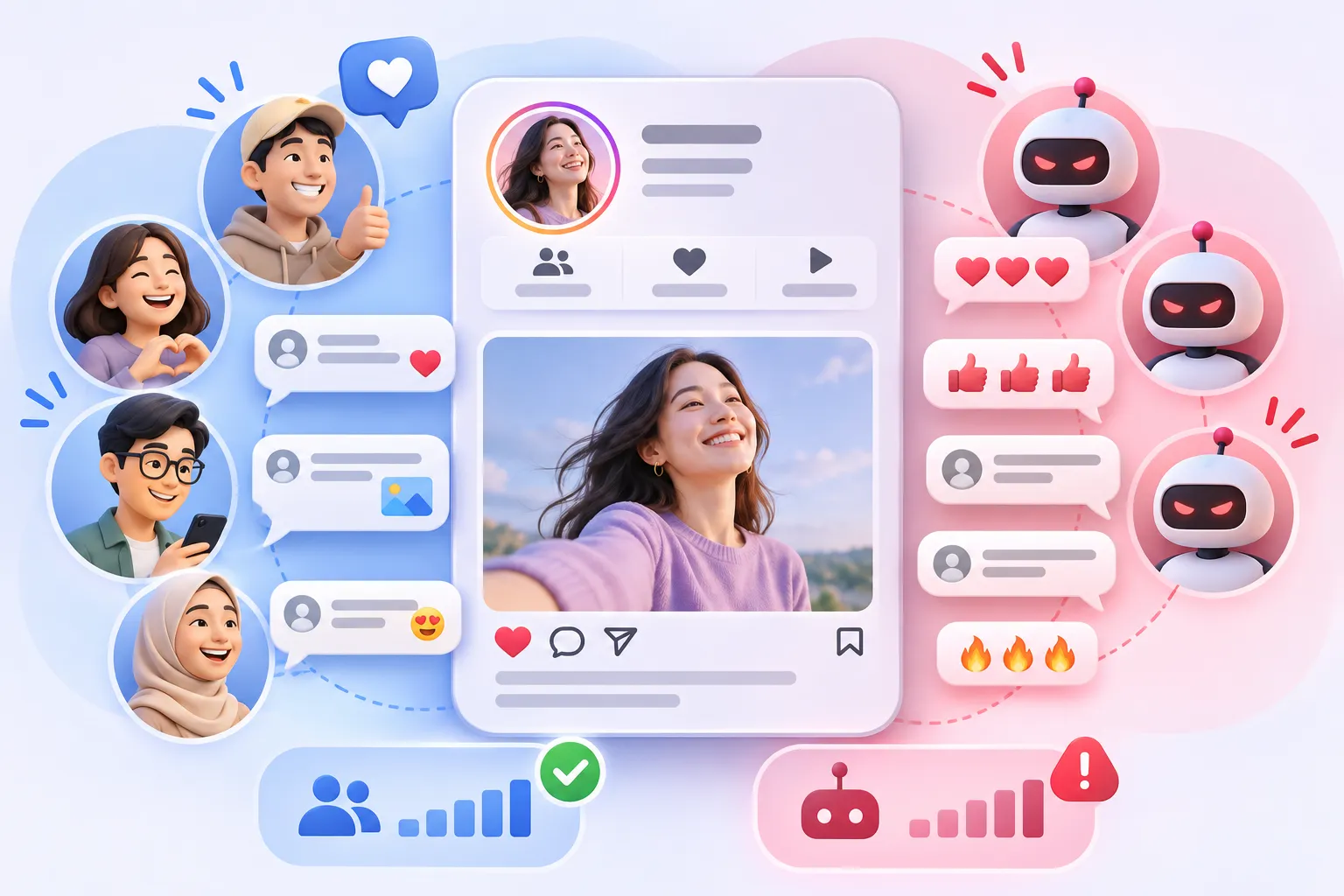
False followers are bots, dormant accounts, or questionable accounts that do not depict the actual followers of the creator. False engagement involves purchased likes, auto-commenting, fake views, and false engagement from non-interested accounts. While both are associated, they are different. The creator may have real followers, but false engagement or vice versa. When assessing the authenticity of an influencer, one should consider the nature of their followers and engagement, as well as comments and audience involvement.
Why It Matters
Influencer marketing is all about the relationship between the creator and their audience. If this isn’t authentic then it can be hard to measure how well the campaign is doing.
Here are some key reasons why you should make sure the creator is authentic before working with them.
Misleading Stats
If they have lots of fake likes, views and comments then it can look like the campaign is doing really well, however there may not really be any real interest from their audience.
Wrong Influencer Choice
They may have lots of followers but not be the best choice if they don’t have a relevant audience. Someone with fewer followers but a more relevant audience would be more suitable if you don’t do the right checks.
Not A Relevant Audience
Their followers may not be relevant to your brand. Even if they have real engagement it will not be of much use if they aren’t likely to be interested in your product/service.
Not Accurate Metrics
Fake engagement can cause misleading metrics. This means it will be harder to compare creators.
Concerns About Brand Credibility
Working with creators who seem to have fake engagement from their audience can cause issues with how quality your campaign is. By checking they are authentic you can make more informed decisions about partnering with them.
10 Ways To Spot Fake Followers & Engagement
There are a number of things to look out for to see if there are any suspicious numbers. Take a look at the following:
- Follower to Engagement Ratio
First thing to look at is how many followers they have and how much engagement they are getting.
For example, they may have 100,000 followers but very few likes or meaningful comments. This could mean they have an inactive audience, their content is not relevant to their audience or they could be growing their followers artificially.
Low engagement doesn’t necessarily mean they have fake followers. Engagement will be affected by how many followers they have, what platform they are on, what niche they are in, what type of content they have and how frequently they post.
Look at a few recent posts to get an idea of what their engagement looks like.
2. Sudden Growth Spikes
Look at how their followers have grown over time. If there has been a sudden spike and they haven’t had a viral post, media mention, giveaway or collaboration then you should look into this further.
For example, if they usually gain followers slowly but suddenly have thousands of new followers in a short space of time with no clear reason then you should take a closer look.
Looking at how their followers have grown can help you to see if anything has changed unexpectedly. Take a look at what they have been up to recently though.
3. Comments
Comments can give you an idea of if people are engaging with their content.
Look for comments that are meaningful, mentioning what the post is about, asking questions, sharing opinions or talking about the product. If they have lots of generic comments such as ‘Nice post,’ or ‘Amazing,’ then you may have low quality engagement.
Having one generic comment doesn’t mean they are faking it, it’s just if there are lots of the same comments.
4. Profile Quality
Take a look at a sample of the accounts that are engaging with their content.
Look out for:
- No profile picture or very little information.
- Randomised usernames.
- Little or no original content.
- Following a lot of people.
- Multiple suspicious profiles.
These don’t necessarily mean they are fake, new users, private profiles or people who rarely post may look inactive. Look for patterns.
5. Engagement On Recent Posts
Look at a few recent posts to see what their engagement looks like.
If one post has a lot more likes/comments than usual then look into why. They may have had a viral topic, trending audio, paid promotion or collaboration. If there are regular spikes with no clear reason then look into this further.
Try to compare similar types of content. A video will naturally have more engagement than a static image.
6. Audience Demographics
It’s just as important to know if their audience is relevant.
Ask them to share some relevant statistics using their native analytics. This could include:
Where they are from.
- Age
- Gender
- Active audience
- Reach & Impressions
For example, if you’re an Indian brand targeting customers in Delhi, Mumbai & Bengaluru then you should look into an account that doesn’t have the right audience.
Just because they aren’t from the right place doesn’t mean they have fake followers. They could have international content or their audience has changed. Just make sure they have the right audience for your campaign.
7. Suspicious Engagement Patterns
While real engagement won’t always look the same, sometimes you can see patterns with suspicious engagement.
This could include:
- Generic comments on multiple posts.
- Lots of engagement in a short space of time.
- Engagement from unrelated/suspicious accounts.
- Regular spikes with no interest in the content.
- Likes/comments that aren’t relevant to the topic.
Try to take all of these into consideration. One post may look suspicious but there could be a valid reason for the sudden spike.
8. Likes, Comments, Views & Reach
Different engagement stats will give you different information.
A video may have lots of views but very few meaningful comments/shares. This doesn’t necessarily mean they have fake engagement as people may be watching but not engaging.
However, if there is a big change in views, reach, likes, comments & shares between similar content then look into why. If possible ask for native analytics.
9. Sponsored Post Engagement
Look at how they are doing with their sponsored posts.
They may have great engagement with their personal content but much less engagement with brand collaborations. This could mean their audience aren’t as interested in promoting.
Look at if they are getting relevant questions, talking about the product, saving, sharing or doing something relevant to your campaign objective.
Not all sponsored posts will be as good as their organic content. It will depend on how relevant the product is, quality of the content, audience expectations and how it is executed.
10. Using Analytics & Verification Tools
While manually checking can be helpful, it can take a long time to check multiple creators. Using influencer analytics can help you keep track of how their audience is growing, what their engagement looks like, how their content is doing and if there are any suspicious patterns.
Some offer an indication of how quality their audience is or how likely they are to be fake. This should just be used as an indicator.
Combining third party reports, native analytics, manual profile checks and campaign history will give you the best results.
Fake Followers vs Genuine Followers: Key Differences
| Evaluation factor | Genuine audience signals | Potential warning signs |
|---|---|---|
| Follower growth | Gradual or explainable growth | Unexplained sudden spikes |
| Comments | Relevant conversations | Repeated generic responses |
| Audience profiles | Varied, active and credible profiles | Repeated suspicious account patterns |
| Engagement | Varies naturally by content | Unexplained repetitive spikes |
| Audience location | Relevant to campaign goals | Significant unexplained mismatch |
| Content interaction | Questions, shares and meaningful responses | Artificial-looking interactions |
| Sponsored posts | Audience interest in relevant promotions | Consistently weak promotional response |
If you are exploring creator partnerships or have questions about influencer marketing opportunities, contact our team to discuss your requirements.
How To Check If An Influencer Is Authentic

Having a structure will help you choose the best influencers consistently. Rather than focusing on how many followers they have.
- Know Your Campaign Objective
Will your campaign be for awareness, engagement, product discovery, driving traffic or conversions? Knowing this will help you understand which metrics are most important. - Check Their Profile
Look at the quality of their content, niche, consistency of posting, conversations with their audience and if they have worked with brands before. - Ask For Native Analytics
Ask them to share some relevant screenshots/reports from their analytics. Take a look at their audience demographics, reach, impressions & engagement. - Check Their Audience
Look at how their followers are growing, if there are any suspicious profiles, quality of comments and any sudden changes in engagement. - Is It Relevant?
Does their audience, content style and communication match your target customers? - Compare Multiple Creators
Use the same criteria to compare multiple creators. Someone with fewer followers but a relevant & engaged audience may be a better choice. - See How They Did
Once you’ve worked with them take a look at the metrics you agreed on. Focus on meaningful results.
Common Mistakes
Even experienced marketing teams can get confused when looking at creator analytics.
Don’t just focus on how many followers they have. Just because they have lots of followers doesn’t mean they’ll be relevant to your campaign.
Low engagement doesn’t mean they are fake. Engagement will vary depending on their niche, platform, content & audience size.
Don’t just use one analytics tool. The fake score is just an estimate.
Don’t forget to check they have a relevant audience. They could have real followers but they may not be right for your campaign.
Don’t just look at one post. Look at multiple posts and similar content.
Don’t assume everyone without a profile picture is fake. Inactive, private & new accounts may not have much information.
Don’t forget to check their sponsored post history. They may not have much engagement with their organic content.
Try to be fair and look at their overall activity, audience, content & campaign objectives.
Final Thoughts

Spotting fake followers & engagement isn’t about finding a suspicious number. It’s about knowing if they have a real relationship with their audience and if their stats are showing real interest.
Before working with them take a look at how their followers are growing, comments, audience demographics, native analytics & content. There is no one metric or tool that will guarantee they are authentic.
Having a structure will help marketing teams compare creators fairly, make informed decisions and work with creators who have real relationships.
Contact us if you’d like to talk about working with creators.