Quick Answer
Influencer marketing works best when viewed as a planned effort beyond just paying a creator to post content. A solid influencer marketing plan starts by setting a business goal, identifying the correct audience, and matching that group with creators able to speak naturally to them.
The process also needs deciding what type of content is required how creators will be judged, what the partnership will entail. How campaign outcomes will be assessed.
If a brand collaborates with niche creators or runs numerous partnership deals then using structure makes managing and evaluating campaigns simpler.
What Is an Influencer Marketing Strategy?

A strategy for influencer marketing involves using partnerships with creators to back a particular aim of marketing.
The influencer marketing strategy usually covers:
- Goals of campaigns
- Intended readership
- Selection of creators
- Requirements for content
- Terms regarding outreach and cooperation
- Project schedule
- Measuring performance
The main point is that the brand needs to match the campaign rather than merely possessing a high follower number.
For instance a beauty label aiming at buyers might gain better material from a niche skin expert whose viewers often discuss items instead of from a broad living influencer despite having many more followers.
Start With a Clear Campaign Goal
First step involves choosing what goals the campaign must reach.
Distinct objectives demand specific creator strategies. A campaign focusing on awareness might prioritize content reach and audience relevance. A campaign focusing on a product could concentrate more on engagement, website visits, leads or conversions.
Common goals include:
- Raising market recognition levels
- Bringing forth a new item
- Getting to a particular group
- Creating consumer desire
- Backing a product launch
- Making repeatable social material
- Establishing enduring connections with creators
Begin by asking "What're we trying to accomplish?" instead of "Which influencers should we contact?". This specific query assists in narrowing down the remainder of the campaign.
Define Your Target Audience
Now that the goal is clear find out the people the campaign requires reaching.
Go past demographics. Think about interests, purchasing patterns, issues, content likes and the places where the audience spends their time.
For instance a health company could aim at individuals doing exercise indoors, jogging, diet plans or building muscle power. Every specific group might react differently regarding kinds of content makers.
Defining the target group clearly helps locate influencers better since one can seek makers with groups matching the project instead of just counting followers.
Decide What Type of Creator You Need
No single creator profile functions well across all campaigns.
Brands can consider creators based on:
- Subject or niche knowledge
- Where the audience resides
- Format content
- Number of viewers
- Patterns of engagement
- Style of communicating
- collaborations with brands
- Presence on platform
A small specialist might possess a very targeted group. A bigger entity could offer visibility. No single path ought to be chosen immediately.
The choice ought to hinge upon the campaign goal plus the specific audience the brand intends to contact.
Build a Shortlist of Relevant Creators
The next step is creator discovery.
Companies may utilize databases, prior alliances, suggestions, marketplace tools for creators, and digital platforms to locate possible partners.
First make a shortlist before contacting dozens of creators right away.
For each creator review:
- Target alignment: Is their audience similar to the client?
- Content alignment: Is their standard material appropriate for the initiative?
- Brand alignment: Does the collaboration seem organic to their viewers?
- Involvement: Are individuals truly interacting with their material?
- Proper fit: Are they quick and distinct regarding partnerships?
Making a shortlist ensures consistency in evaluation. It lowers risk of picking a creator just because profile appears popular.
Review the Creators Content Before Outreach
A profile might seem right initially yet remain a bad match for the campaign.
Take time to look at material instead of just the creator's profile details.
Search for what subjects they usually discuss how they speak with fans the standard of their material and how paid advertisements match their manner.
Also think if their past work seems related to the brand.
For brands handling possible partnerships, a creator-focused platform like Vitaay could serve within the wider discovery and collaboration workflow.
The aim is not to locate a creator, on paper. The aim is to locate someone whose audience, content and communication style fit the campaign.
Create a Clear Collaboration Brief
Once creators are chosen then determine exactly what the collaboration entails.
A useful brief should explain:
- Objective of campaign
- Information regarding product or service
- Required content format
- messages
- Outputs
- Publication schedule
- Brand standards
- Revealing necessities
- Process for review or approval
- Measurement needs
Similarly one should not manage every single statement made by the author.
Creators comprehend their viewers. Often learn methods to speak with them genuinely.
A proper brief offers limits yet keeps space open for the creative voice.
Make Creator Outreach Personal
Generic outreach can make a collaboration feel transactional.
Of sending identical message to each creator explain why creator was selected and connect opportunity to their existing content.
An easy outreach note could state a kind of content the maker makes describe the campaign thought and give the main collaboration facts.
The goal is to let the creator see why the partnership matters before asking them to commit.
Brands wishing to talk about creator partnerships or collaboration opportunities should contact Vitaay as a possible next step.
Set Expectations Before the Campaign Starts
Most campaign issues stem from expectations instead of bad creator choice.
Prior to starting content creation both parties must know the agreed items such as deliverables, deadlines, usage rights, pay, revisions, approvals, and reporting needs.
It is also vital to determine who holds responsibility for supplying products, creative materials, links, discount codes or other campaign resources.
Setting clear goals lessens confusion down the road. Provide both the brand and creator with a mutual grasp of the work.
Give Creators Room to Create
Influencer marketing depends on authenticity.
Audience follow creators due to their specific style, unique perspective, or method used for showing data.
When a brand makes each post an ad then the material could seem unlinked to the creator normal job.
A superior method involves conveying the campaign's needs yet letting the designer choose how to show the message inside these limits.
Here is where effective creator approach manages brand oversight alongside creator liberty.
Measure the Campaign Against Its Goal
Once the campaign finishes review performance against the goal set at start.
Depending on the campaign useful measurements may include:.
- Reach and impressions metrics
- Participation
- Views on video
- Clicks on links
- Lead
- Sales or transformations
- Usage of content
- Response from audience
Do not judge every campaign using the metric.
For instance a campaign built mainly to launch a brand might get judged unlike one made to cause direct site changes.
A beneficial measurement structure links directly to the primary commercial objective.
Common Mistakes to Avoid

A well- a planned campaign may fail if simple choices are ignored:
- Selecting authors solely based on subscriber numbers
- Disregarding audience standards
- Applying identical tactics to each creator.
- Providing vague campaign directions
- Concentrating solely upon immediate outcomes
- Bypassing the review phase
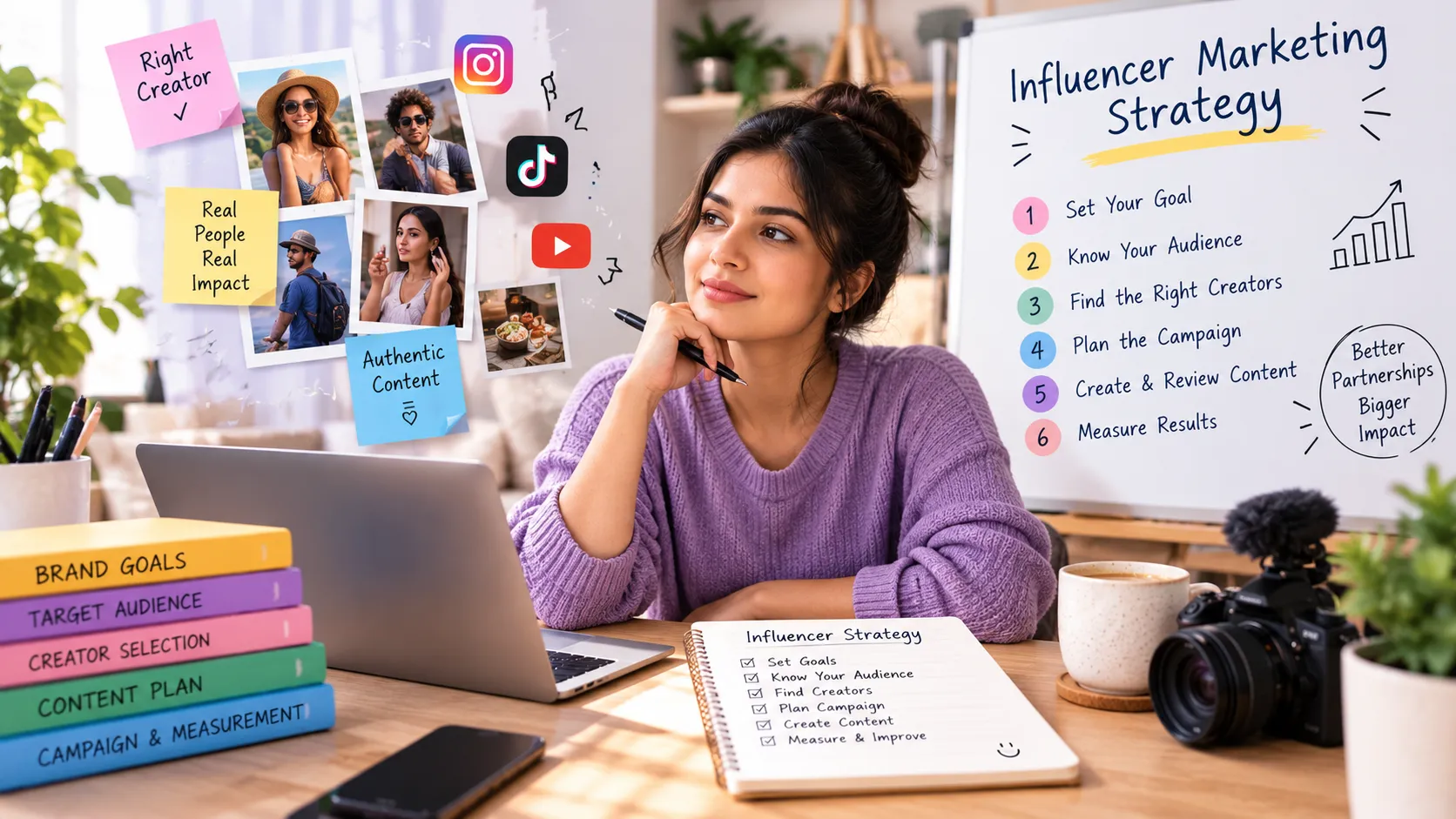
A Simple Influencer Strategy Framework
A functional influencer marketing process may be outlined as follows:
- Objective to
- Target to Creator
- Finding to
- List to
- Assess to
- Contact to
- Task to
- Material to
- Measure to
- Enhance
Final Thoughts
Creating an influencer marketing plan involves less locating the person with the largest following and more establishing a sensible link among the company, creator, viewers and the specific goal of the promotion.
Begin by aiming to know the audience then pick creators closely check what they make state needs plainly and test results versus the aim.
Significantly handle creator partnerships as collaborations instead, of mere ad spots. If brands honor a creator's grasp of their viewers yet keep campaign needs, the work relation gets simpler to run and judge.
Keep up with creator and influencer marketing news by following Vitaay on Instagram.