Quick Summary
Popular influencer discovery tools are Modash, HypeAuditor, Upfluence, Aspire, CreatorIQ and Heepsy. Brands can utilize these to search for influencers and analyse audiences. The appropriate discovery tool will depend upon your brand’s aims, budget, favoured social media platforms and desired analytical and/or campaign management functionality.
What Are Influencer Discovery Tools?
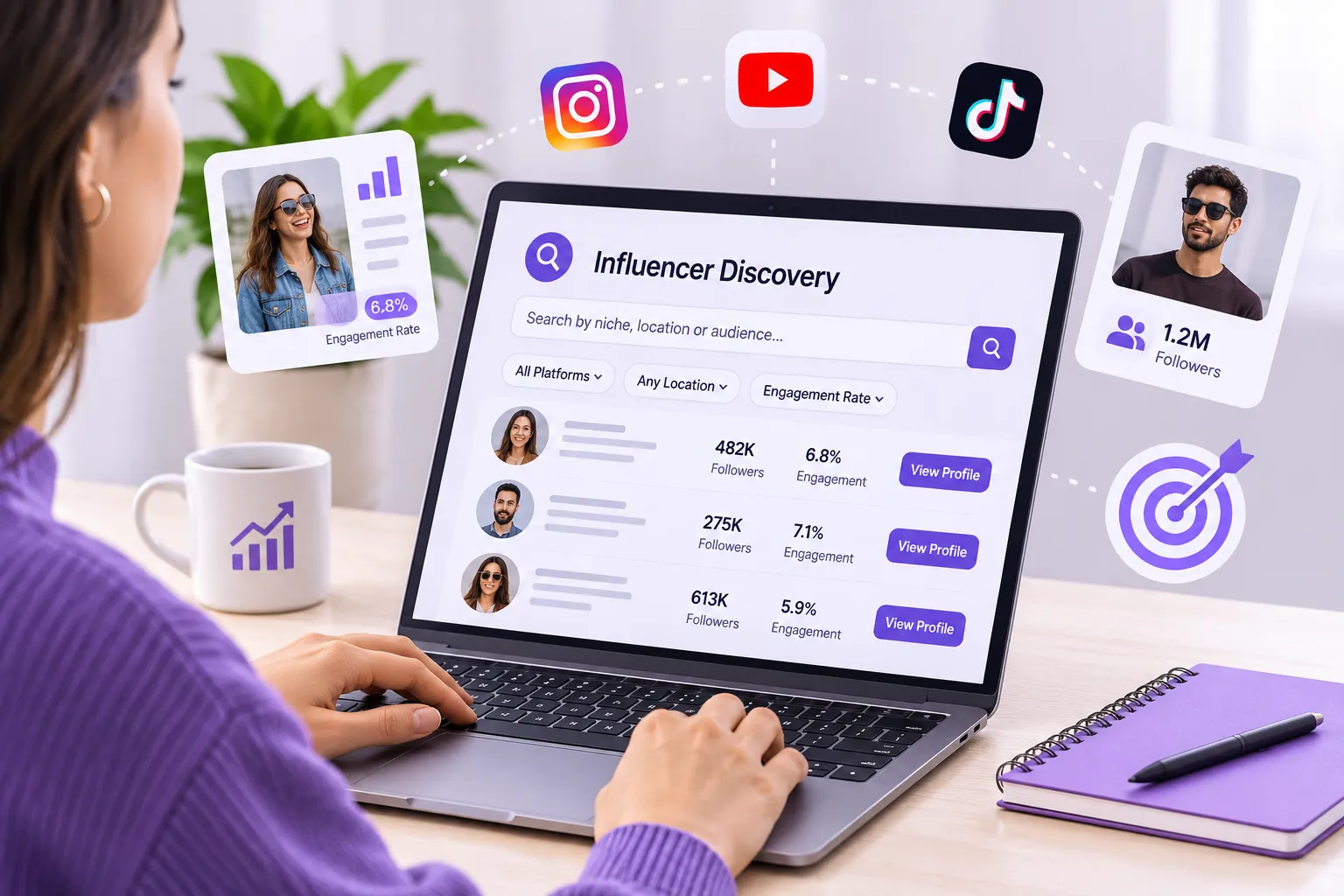
Digital influencer discovery tools are used by brands to locate suitable content creators. Brands can search for influencers by various attributes, for example, sector, geographical area, and audience profile.
If a skincare brand is launching a new product for example, it may wish to work with beauty influencers whose audiences are interested in skincare. Rather than contacting all widely followed influencers, brands can use discovery tools to specifically identify those that are more appropriate for their brand.
Alongside discovery functions, many tools also offer further analytical and/or campaign related features, and can analyse for example, audience value, past influencer content and influencer value. Campaign management functionality is often also available.
6 Top Influencer Discovery Tools
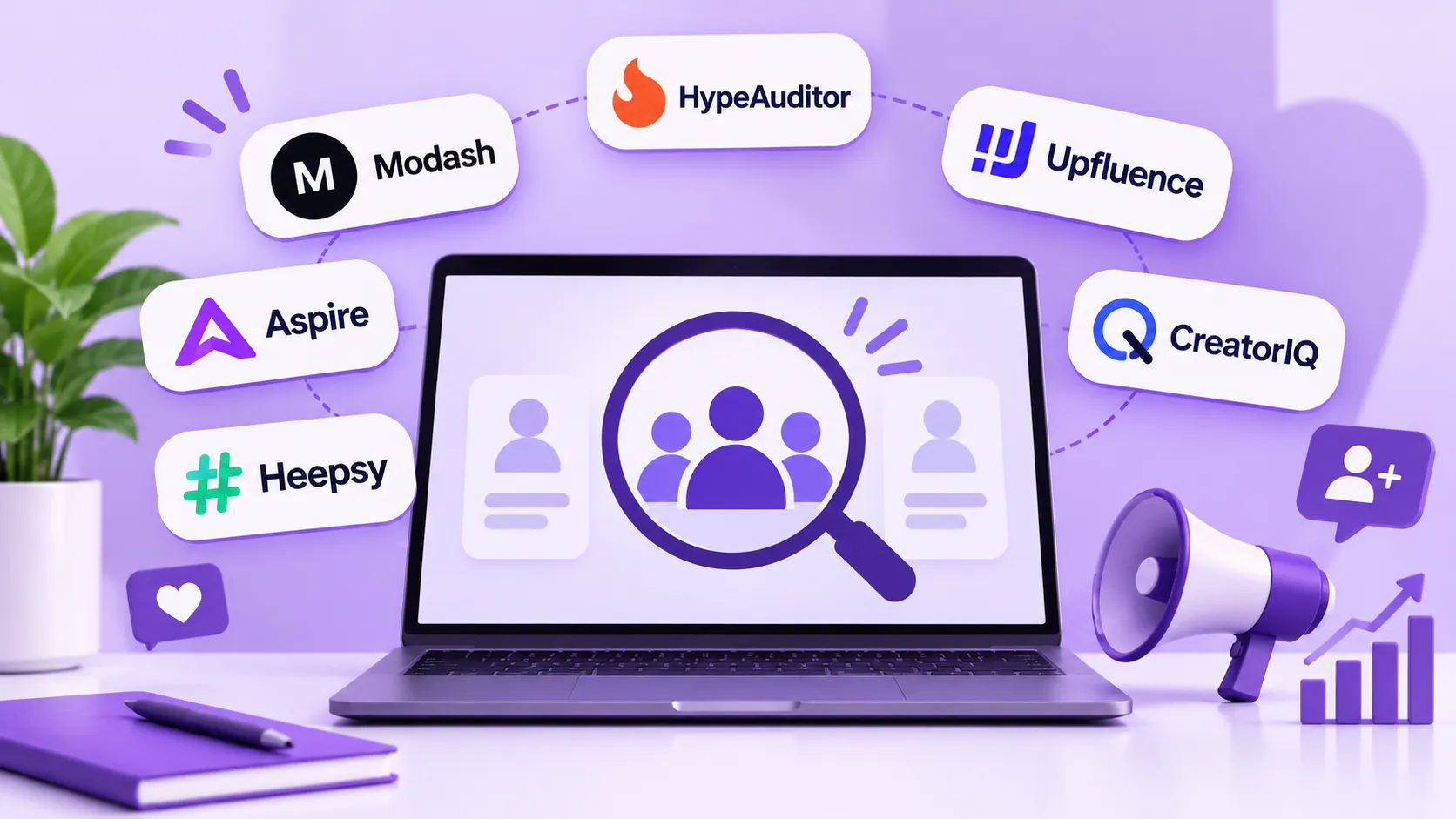
Each discovery tool has its own features. Some predominantly focus on searching for and analysing influencers, whereas other tools also offer functionality to facilitate brand outreach, influencer working and campaign management.
1. Modash
This platform enables brands to locate influencers from a range of social media sites, such as Instagram, TikTok and YouTube.
It allows brands to analyse influencers and refine a search by audience data. Brands can thus identify appropriate influencers for working with depending on elements such as sector and audience geography.
Best for: Brands and agencies that wish to search for and analyse influencers.
2. HypeAuditor
Combining influencer discovery, audience analysis and influencer value assessment, this tool enables brands to analyse further beyond just an influencer’s followership data.
Brands can analyse audience data and an influencer’s engagement and also assess whether there are any potential issues around an influencer’s authenticity. This can, for example, enable fashion brands to analyse two influencers and determine which has a more relevant audience alongside (potentially) a larger following. Brands can then more effectively decide which influencer is most suitable for working with.
Best for: Brands keen to analyse influencer and audience value.
3. Upfluence
This influencer marketing tool encompasses influencer discovery and campaign management functions. It is especially pertinent for brands wishing to integrate influencer marketing with wider e-commerce activity.
As well as being able to locate influencers, Upfluence facilitates relationship management and campaign management. Its e-commerce related functionality can also assist brands in analysing links between customers and influencers.
Best for: E-commerce brands running influencer campaigns.
4. Aspire
Aspire is another influencer discovery and campaign management tool. It is appropriate for brands keen to develop relationships with, and manage, influencers.
Such tools can be valuable in that they can be used to engage with both proactively sought influencers and those who express an interest in brand collaborations via market-place style discovery functions.
For example, a beauty brand working on a seasonal campaign can use proactive influencer discovery to locate suitable influencers and then manage these working relationships.
Best for: Brands developing creator and brand ambassadors programmes.
5. CreatorIQ
Designed for brands running extensive creator programmes, this influencer marketing tool includes functions for influencer discovery, relationship management and campaign management.
It can be of value to brands running several campaigns, within differing markets or departments and who seek to ensure uniformity in relation to creators and associated procedures.
For larger companies, having a central point of reference can also simplify the management of creator relationships and enable effective analysis of campaign performance.
Best for: Enterprise brands and large marketing teams.
6. Heepsy
This is an influencer discovery tool. Much like other discovery tools, it enables brands to search for and analyse influencers.
Smaller brands and marketers can utilize it in order to locate influencers operating within particular sectors, without necessarily needing to undertake extensive self-led social media influencer searches.
A local fitness brand could, for example, use influencer discovery to locate fitness related influencers and then analyse their profiles to consider whether they would be appropriate for working with.
Best for: Small businesses and marketers seeking to conduct influencer discovery.
How to Choose an Influencer Discovery Tool
Whilst not always the case, the best discovery tool may not necessarily be the one with the widest influencer database. An appropriate tool will enable brands to effectively locate relevant influencers and then make sound decisions regarding working with these influencers.
Factors to consider are:
1. Search and refinement options
Ensure that the tool enables you to search for influencers by sector, geography, social media site and audience. Being able to refine searches can save time as you will be able to disregard less relevant profiles.
2. Audience data
Confirm that the discovery tool can analyse audience data. In particular, this is important if your brand is seeking to engage with a defined market sector.
3. Engagement and authenticity
Whilst an influencer’s follower count is a factor, this does not fully reflect how well they engage with their audience. Where possible, analyse an influencer’s engagement data and comments, as well as assessing audience authenticity.
4. Social media integration
Ensure that the discovery tool can be used to locate influencers on the social media sites your brand’s audience frequents. If for example, YouTube is your primary marketing social media site then a discovery tool that is well adapted to Instagram may not be appropriate.
5. Cost and functionality
Compare the tool’s subscription fee and analyse its functionality and search capacity. Alongside this, investigate any supplementary costs that may apply. Smaller businesses may not require the full functionality of an enterprise tool. Conversely, larger marketing teams may wish to utilise a more extensive campaign management function.
Brands looking to simplify creator discovery and build meaningful partnerships can explore the solutions available through Vitaay.
Practical Steps to Successfully Locate Appropriate Influencers

Even with access to discovery tools, brands should implement a structured methodology to optimally translate influencer discovery into working relationships.
1. Establish campaign aims
Determine what you wish to achieve through your campaign. This could involve product promotion, brand awareness raising, generation of user created content or stimulating customer enquiries. Your brand’s aims will in turn affect the type of influencers that you wish to work with.
2. Analyse your target audience
Analyse the profile of your desired audience. Consider aspects such as their sector of interest, geographical area, age and purchasing behaviours, together with their social media usage.
3. Locate relevant influencers
Use discovery tools to locate influencers operating within relevant sectors. Again, rather than solely working with the first influencers shown in a search, compile a list of potential influencers.
4. Analyse influencers
Investigate an influencer’s historical content, manner of communication and content standard. Assess whether their typical content would easily integrate your brand’s product or service.
5. Clarify working expectations
Following the compilation of a list of relevant influencers, establish with them what is expected of them in relation to your campaign. Matters to consider include what is required from them, timescales, payment and permissions for and control over content.
6. Implement and analyse campaign
Depending on your brand’s aims, analyse your campaign in relation to metrics such as engagement, web traffic, enquiries, conversions and/or content performance.
7. Further enhance influencer working
Analyse the successes and areas for development of your campaign. Maintain beneficial data concerning influencers, their audience relevance and communications so that you can further effectively inform future influencer selection.
How Vitaay can aid Influencer and Brand Discovery
Alongside identifying relevant influencers, brands and creators also require a platform which enables them to analyse working possibilities and develop strong professional relationships.
Vitaay’s creator and brand platform centres on brand-creator discovery, working and campaign related functions. It therefore cultivates a creator led environment which enables both parties to analyse relevant working prospects.
For brands, it is essential to not only locate creators happy to advocate for a brand’s product, but also to identify those whose content and audiences are appropriate for the brand. Similarly, creators should identify brands with which they can work in a manner that is consistent with their own content and sector of interest.
Should you be investigating brand-creator working possibilities or have brand working queries, please contact our team to discuss your needs.
Conclusion
Whilst influencer discovery tools can effectively structure brands’ influencer research, they also assist brands in analysing influencers beyond simply their follower numbers. Modash, HypeAuditor, Upfluence, Aspire, CreatorIQ and Heepsy are all popular discovery tools and each has differing functions, so the most suitable will depend on a brand’s needs and budget. Follow Vitaay on Instagram to explore updates, creator partnerships and insights related to influencer marketing.